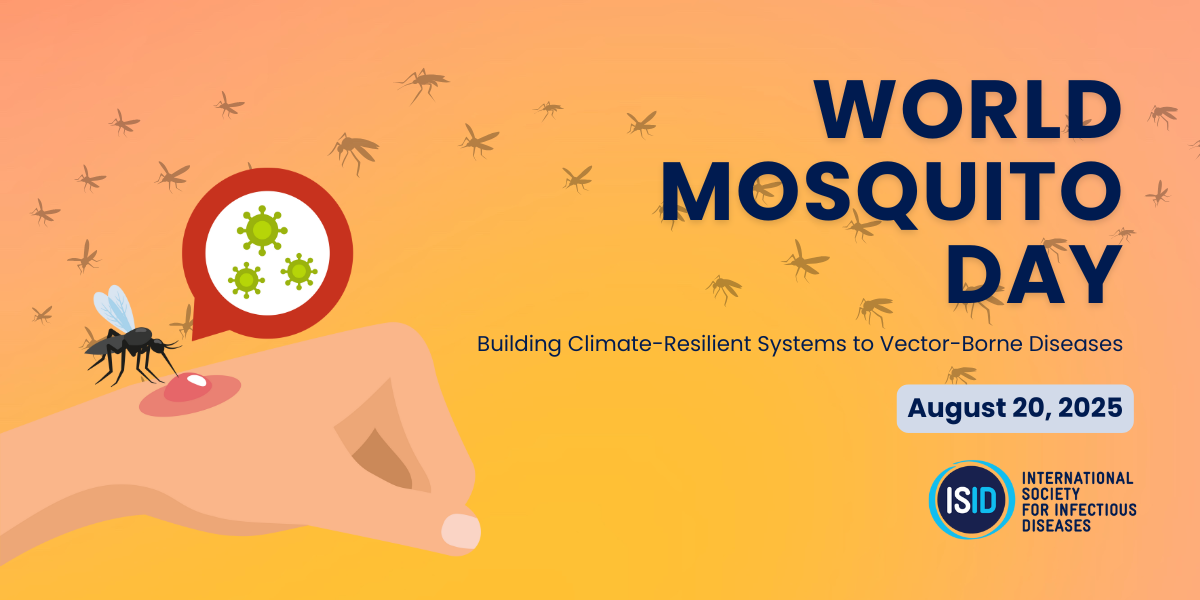
World Mosquito Day 2025 – More than a century after World Mosquito Day was established, mosquitoes continue to be the deadliest animal worldwide. Each year, mosquito-borne illnesses cause over 700 million infections—roughly one in ten people—and are responsible for spreading serious diseases such as malaria, dengue, Zika virus, yellow fever, West Nile virus, chikungunya, Japanese encephalitis, Rift Valley virus, and lymphatic filariasis.
Malaria is responsible for about 249 million cases worldwide each year, causing over 608,000 deaths, mainly among children under five. Dengue fever causes approximately 390 million infections each year, resulting in clusters and outbreaks in urban areas. The Zika Virus Disease was linked to one of the largest clusters of microcephaly and neurological conditions in 2015, resulting in a global loss of 30,027 DALYs from 2015 to 2020. By July 2025, around 240,000 CHIKVD cases and 90 related deaths have been reported across 16 countries and territories, mostly in the Americas, Africa, Asia, and Europe.
The impact of these diseases extends beyond health, resulting in poverty, lower productivity, and weaker health systems. Countries spend billions on healthcare, lost workdays, and tourism decline due to mosquito-borne illnesses. The spread of new infections like Zika and dengue into new areas highlights the connection between climate change and globalisation, reminding us that no nation is entirely safe from mosquito threats.
Climate change is altering mosquito habitats and how they transmit diseases. Increasing global temperatures accelerate the mosquito life cycle and the development of viruses and parasites, such as malaria and dengue, within mosquitoes. Urban flooding creates stagnant water pools that serve as breeding grounds, while drought can cause people to store water in containers, creating new habitats. Together with poor waste management, these changes are expanding habitats for mosquitoes such as Aedes aegypti (which transmits dengue, chikungunya, and Zika) and Anopheles species (malaria vectors) into areas that were previously unsuitable.
Controlling mosquito-borne diseases directly reduces child mortality, maternal health complications, and outbreaks in fragile communities.
- Climate-informed surveillance: Countries are increasingly integrating climate and entomological data to develop predictive models for forecasting mosquito population surges and potential outbreaks. This approach enhances the ability of public health officials to implement timely interventions and improve disease control strategies. Strengthening entomological surveillance and predictive modelling plays a crucial role in detecting mosquito breeding sites and outbreak risks, thereby aiding in more effective disease prevention efforts.
- Sustainable vector control: Efforts to control mosquito populations are advancing through various innovative methods. These include the use of genetically modified mosquitoes and sterile insect techniques to reduce their numbers effectively. Additionally, research is ongoing into next-generation insecticides designed to overcome the increasing resistance faced by current solutions. Investment is also being directed toward green technologies, such as biological methods, innovative traps, and genetic modification, to create more sustainable and effective mosquito control strategies.
- Adaptation strategies: Strengthening health systems is essential to preparing for climate-driven shifts in disease distribution. Rapid response capacity should include training on vector-borne disease outbreaks response and emergency stockpiles of bed nets, vaccines, rapid test kits and other diagnostics. Community engagement, such as mobilising communities to eliminate mosquito breeding sites, including areas with poor drainage, is essential. Additionally, promoting personal protection measures like the use of repellents and wearing protective clothing can further reduce individual risk.
- Global partnerships: The WHO’s Global Vector Control Response emphasises the impact of climate change as a key driver of vector-borne diseases. Programs like the Roll Back Malaria (RBM) Partnership and WHO’s Global Vector Control Response 2017–2030, involves collaborations with governments, non-governmental organisations (NGOs), and the private sector to address this pressing health challenge.
- Infection Control & Elimination Efforts: Scale-up of long-lasting insecticide-treated nets (LLINs), indoor residual spraying (IRS), and improved diagnostic and treatment tools. Deployment of the first malaria vaccines (RTS,S/AS01 and R21/Matrix-M), now being rolled out in African countries.
While progress has been made, climate change, urbanisation, insecticide resistance, and fragile health systems still heighten mosquito-borne disease risks. World Mosquito Day 2025 emphasises the need for collective investment in research, innovation, and community action to safeguard global health. Climate change is transforming mosquito-borne diseases into a global health security challenge. Protecting vulnerable populations requires climate action, innovative vector control, and stronger health systems working in synergy.
Written By ISID Emerging Leader, Abiodun Egwuenu