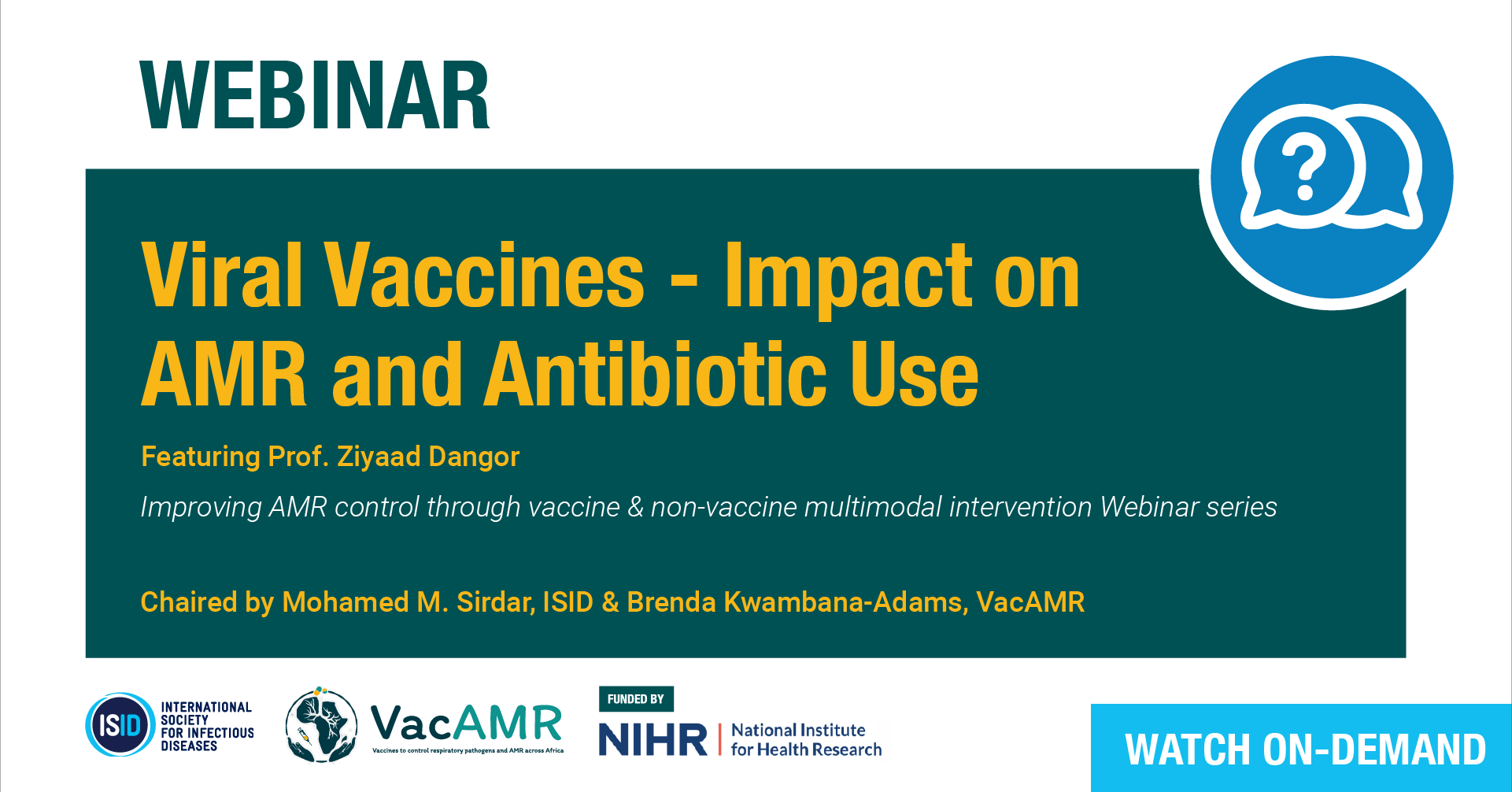
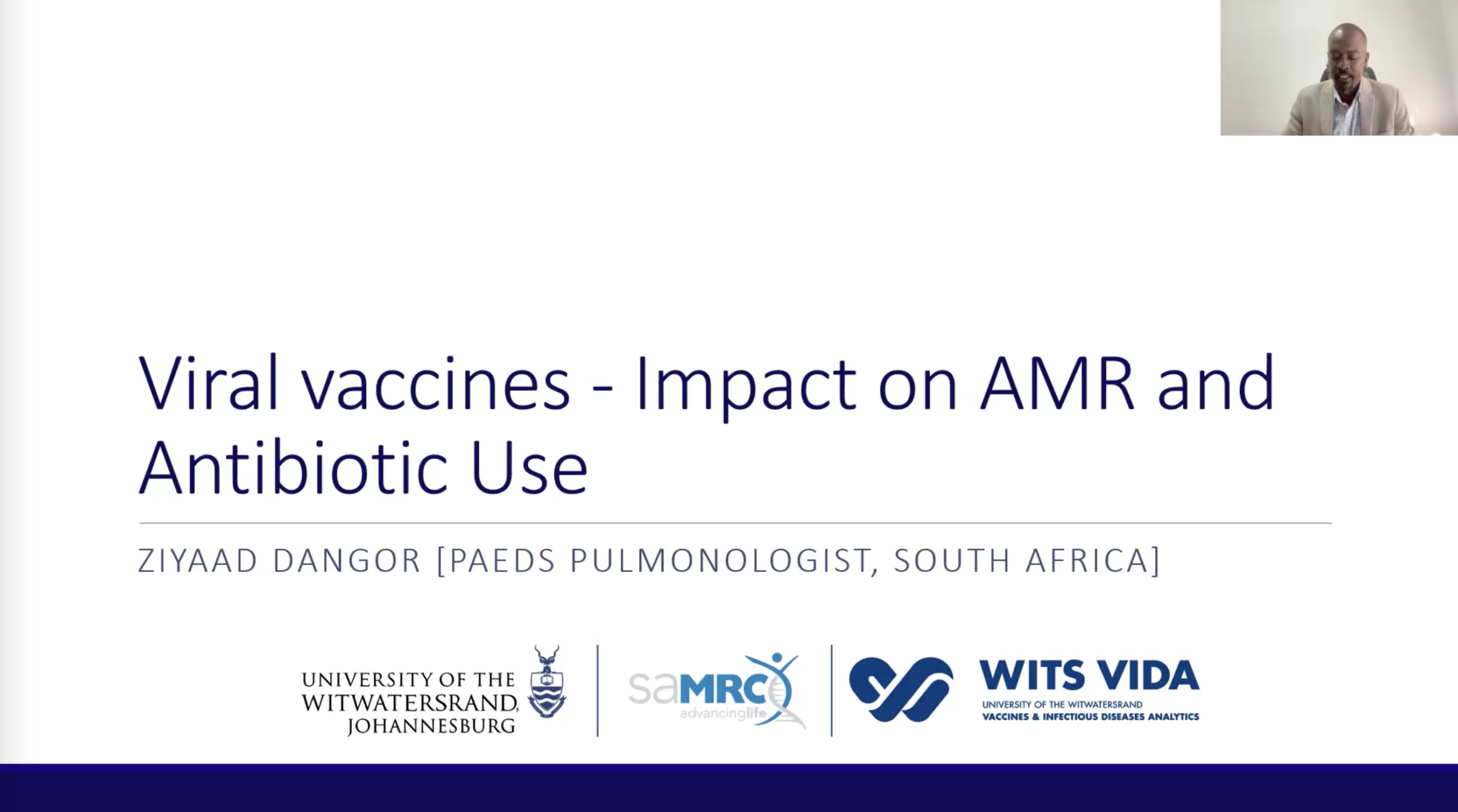
The webinar explored the growing evidence that viral vaccines offer benefits extending far beyond protection against infectious diseases. Professor Dangor demonstrated how effective vaccination programmes can reduce healthcare visits, prevent complications and secondary bacterial infections, and significantly decrease inappropriate antibiotic prescribing. By reducing the demand for antibiotics, vaccines contribute to lowering the selective pressure that accelerates the emergence and spread of resistant pathogens.
Professor Dangor, Clinical Research Director at the Medical Research Council's Vaccines and Infectious Diseases Analytics (VIDA) Research Unit and Paediatric Pulmonologist at Chris Hani Baragwanath Academic Hospital, shared insights from clinical and epidemiological research examining the relationship between vaccination, disease prevention, and antimicrobial stewardship. Drawing on experiences from South Africa and global evidence, he highlighted the increasingly important role of immunisation as a sustainable and cost-effective intervention within broader AMR strategies.
The session forms part of the VacAMR initiative, a National Institute for Health and Care Research (NIHR)-supported programme that aims to improve AMR control through vaccine and non-vaccine multimodal interventions focused on respiratory diseases. VacAMR is building an Africa-led public health approach to tackling respiratory pathogens and AMR through collaborative partnerships involving research institutions and public health agencies across Kenya, Malawi, Ghana, and Nigeria. Through these partnerships, the programme seeks to strengthen research capacity, generate evidence, and support the implementation of effective interventions across the continent.
The webinar series was established to provide a platform for knowledge exchange, collaboration, and capacity strengthening at the intersection of vaccines and AMR. Bringing together researchers, policymakers, funders, clinicians, and public health practitioners, the series showcases cutting-edge research, emerging innovations, and policy opportunities while fostering cross-country collaboration and mentorship.
Moderated by Dr Mohamed M. Sirdar (ISID AMR Global Progam Specialist) and Dr Brenda Kwambana-Adams (VacAMR), the webinar attracted participants from diverse sectors and regions. Discussions during the interactive question-and-answer session highlighted the importance of integrating immunisation programmes into national AMR action plans, strengthening vaccine uptake, improving surveillance systems, and investing in research to quantify the impact of vaccines on antimicrobial use and resistance patterns.
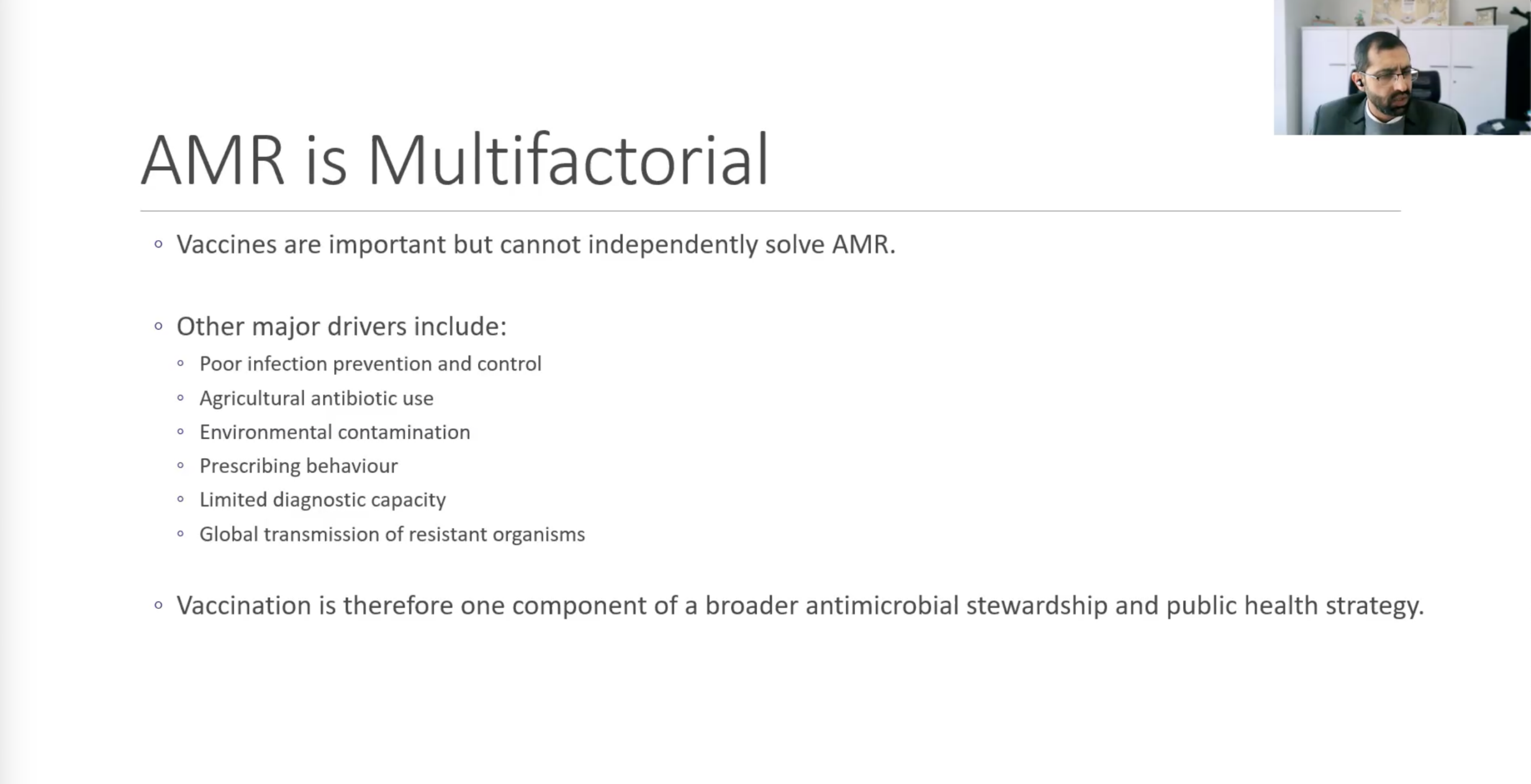
The webinar reinforced a central message of the VacAMR programme: vaccines should be recognized as a critical, yet often underutilized, intervention in the fight against AMR. While antimicrobial stewardship, surveillance, diagnostics, and infection prevention remain essential pillars of AMR control, vaccination provides a proactive means of reducing infections and preventing the need for antimicrobial treatment altogether. This preventive approach offers substantial opportunities to reduce the burden of resistant infections while improving health outcomes, particularly in low- and middle-income countries.
As the webinar series continues, ISID and VacAMR remain committed to advancing evidence-based dialogue on innovative approaches to AMR prevention and control. Future sessions will explore topics including pathogen surveillance, vaccine economics, malaria vaccines, digital health innovations, community engagement, and the use of evidence to inform AMR policy, contributing to a growing global community of practice dedicated to preserving the effectiveness of antimicrobials for future generations.