
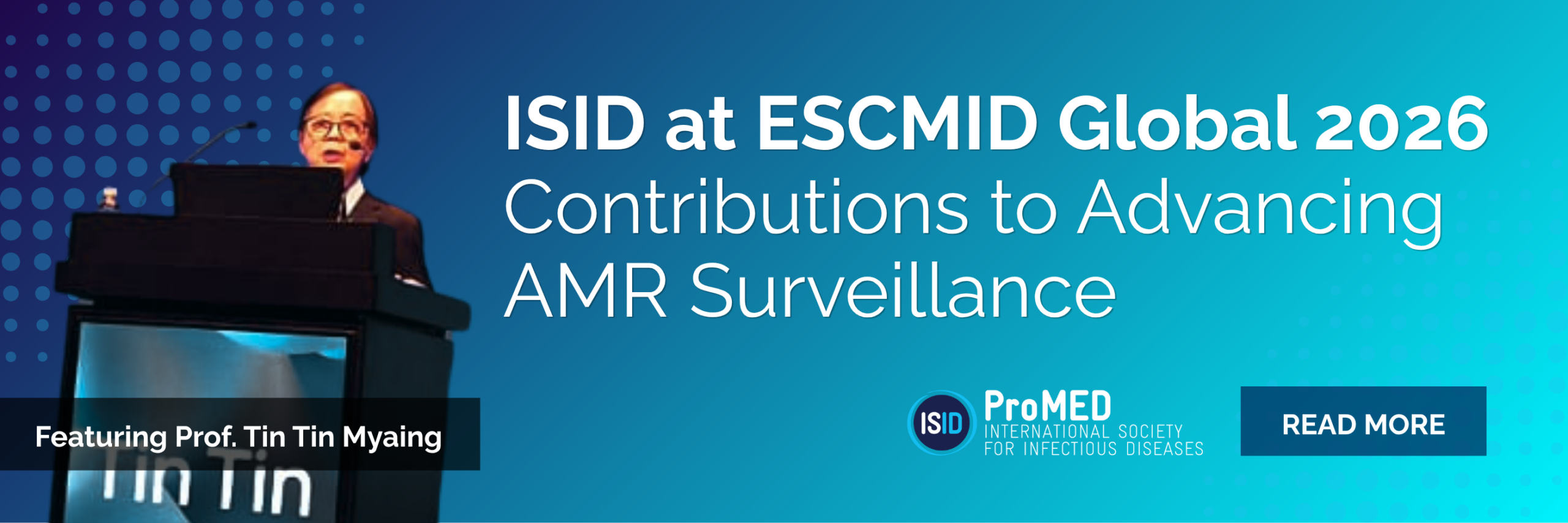
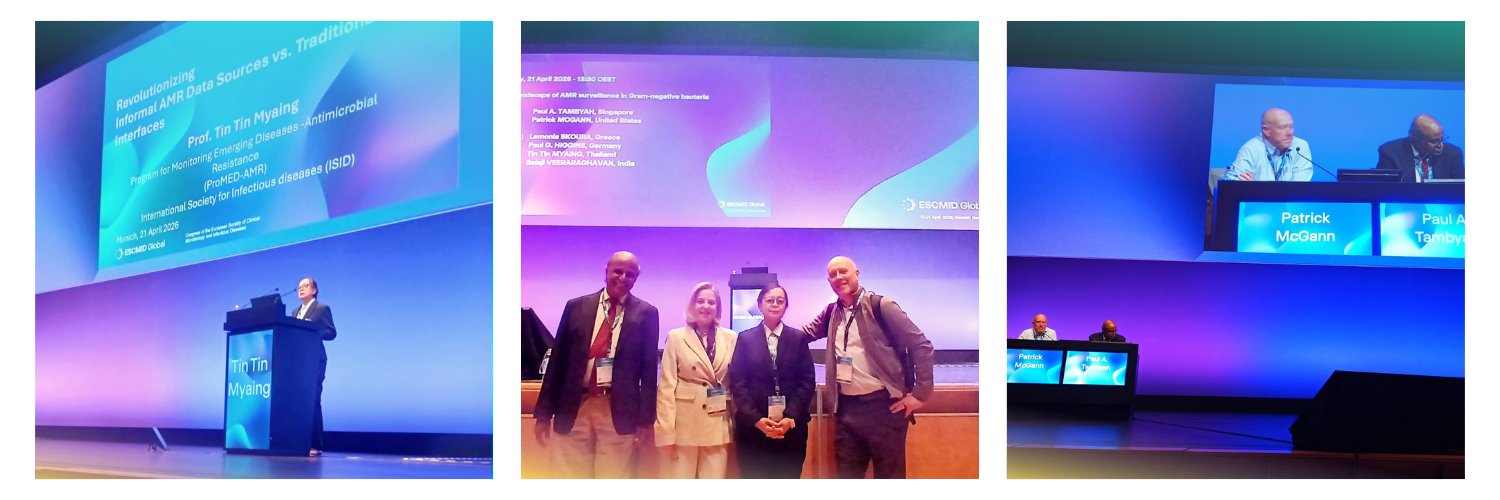
ISID was pleased to contribute to discussions at ESCMID Global 2026. As part of ISID ESCMID 2026 activities, global experts convened to address the evolving challenges of infectious diseases, particularly the growing threat of antimicrobial resistance (AMR).
ISID at ESCMID Global 2026: Contributions to Advancing AMR Surveillance
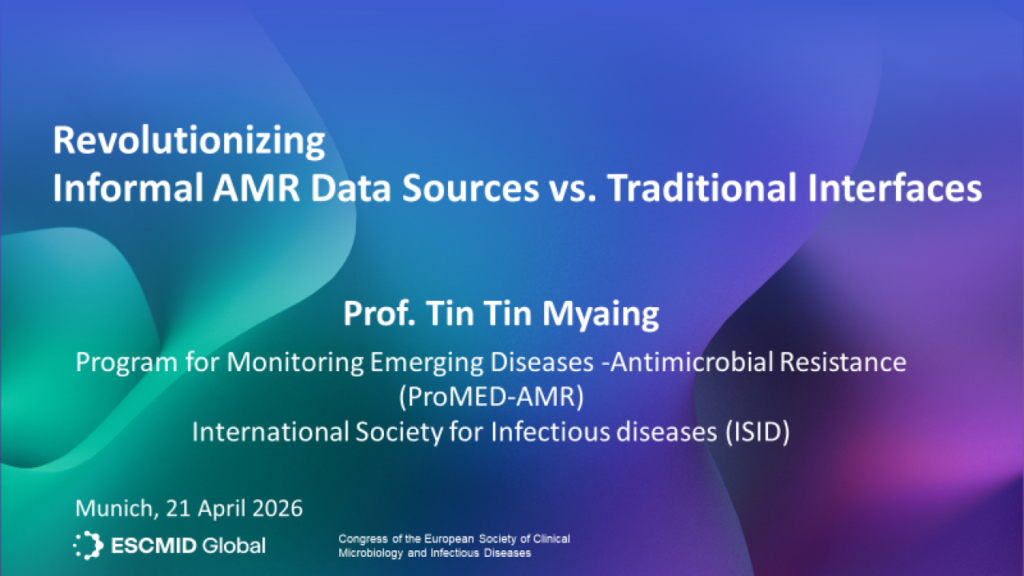
As part of the scientific programme, Professor Tin Tin Myaing (ProMED-MBDS & ProMED-AMR Moderator) presented on the role of informal, event-based surveillance in strengthening early warning systems for AMR. Her session, "Revolutionizing Informal AMR Data Sources vs. Traditional Interfaces," highlighted how digital platforms like ProMED-AMR can complement traditional surveillance systems by providing more timely signals of emerging threats.
AMR continues to pose a significant and growing risk to global health. Projections estimate nearly two million deaths annually by 2050 if current trends continue. While conventional surveillance systems remain essential for generating high-quality, validated data, they are often limited by reporting delays that can hinder outbreak detection and response. Event-based surveillance leverages a wide range of non-traditional data sources, including media reports, social media, and environmental signals such as wastewater monitoring, to identify potential threats earlier.
A key focus of the presentation was the integration of artificial intelligence (AI) and machine learning (ML) into surveillance workflows. These technologies act as powerful tools for interpreting large volumes of unstructured data, transforming disparate signals into actionable epidemiological insights. By combining digital surveillance approaches with advances in genomics and data science, this framework supports more timely, informed, and coordinated public health responses.
Reflections & Moving Ahead
ISID's participation at ESCMID Global 2026 also shows its commitment to collaborating across disciplines and geographies. Through initiatives such as ProMED-AMR, ISID continues to support early detection, global information sharing, and capacity strengthening, particularly in regions disproportionately affected by infectious diseases.
This work highlights the importance of a One Health approach, recognizing the interconnectedness of human, animal, and environmental health in addressing global threats like AMR. As surveillance systems continue to evolve, integrating traditional methodologies with innovative digital tools will be critical to improving preparedness and response worldwide.
To access the livestream, registered ESCMID Global 2026 attendees can access the recording through the ESCMID app.
VIEW TIN TIN'S PRESENTATION
LEARN MORE ABOUT PROMED & PROMED-AMR