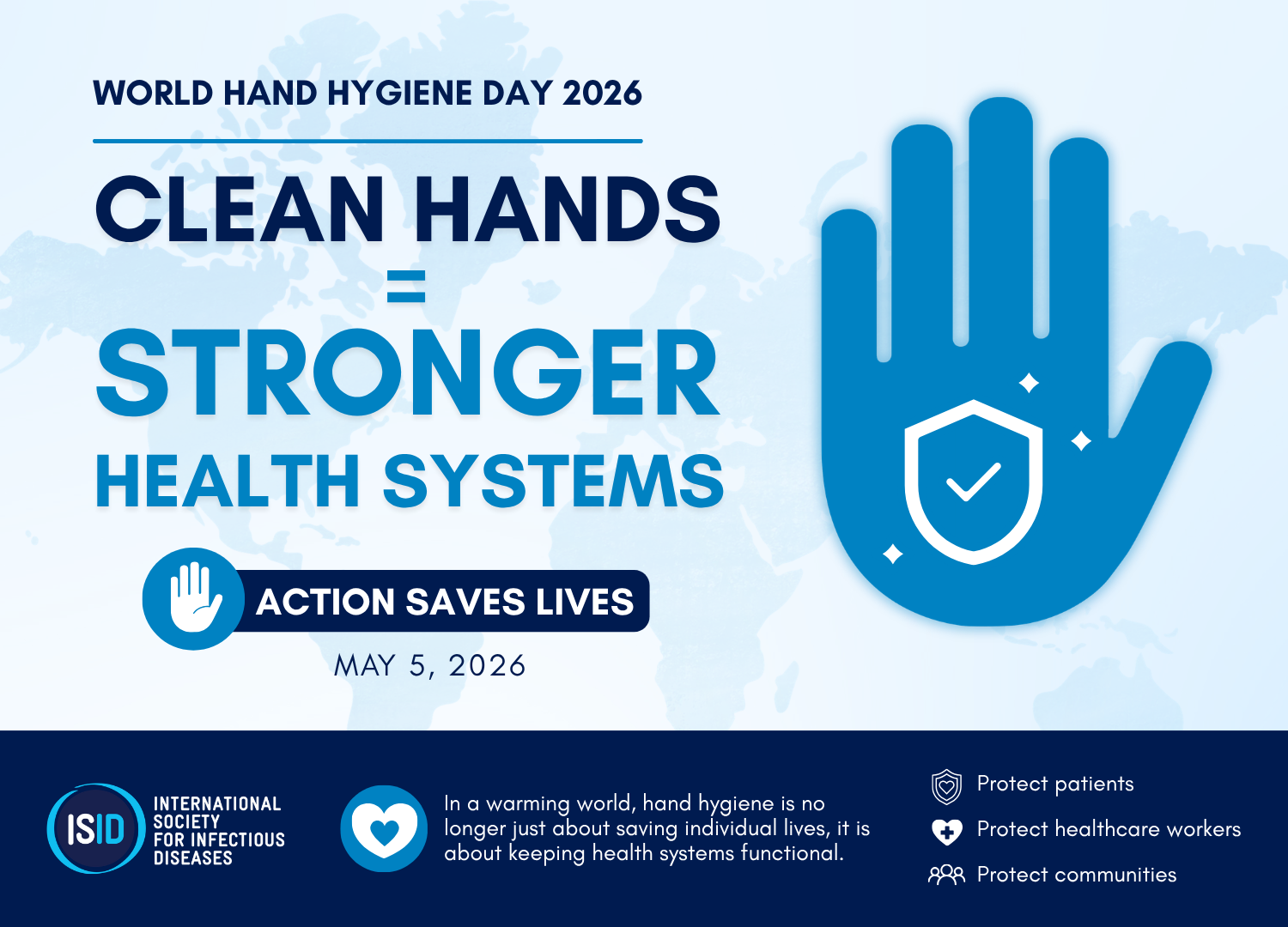
World Hand Hygiene Day reminds us that prevention begins with action. This year, that action must be sustained, climate-aware, and embedded into the way we protect health systems every day. Each year on 5 May, World Hand Hygiene Day serves as a powerful reminder to me, as an infectious-disease professional, that clean hands, represented by our five fingers, are still among the most effective tools we have to safeguard patients, health workers, and communities. While climate-resilient WASH is gaining visibility in global health, hand hygiene is the most climate-robust infection control tool available, yet remains rarely recognised as a core strategy for health-system survival in the climate era, especially within infectious-disease leadership.
As infectious disease experts, it is impossible to separate patient safety from the realities of climate change. Rising temperatures, extreme weather events, water insecurity, and fragile health systems are no longer theoretical risks, they shape how care is delivered every day. Against this backdrop, the theme of World Hand Hygiene Day 2026, "Action Saves Lives," feels more urgent than ever. "In climate-stressed health systems, hand hygiene functions as system glue-holding patient safety together when infrastructure, staffing, and supply chains begin to fracture." But I believe we need to say something more clearly: in a warming world, hand hygiene is no longer just about saving individual lives; it is about keeping health systems functional.
Hand Hygiene Looks Very Different on the Ground
Hand hygiene is often described as a “simple” intervention, yet those working on the frontline know this is not always the case. In many healthcare settings, particularly those already vulnerable to climate stress, hand hygiene is practiced under conditions marked by unreliable water supply, overcrowded facilities during heatwaves or outbreaks, infrastructure damage from extreme weather, and inconsistent availability of soap or alcohol-based hand rub. When floods contaminate water systems or droughts limit access to clean water, the risk of healthcare-associated and waterborne infections increases sharply. Under such conditions, every missed opportunity for hand hygiene carries amplified consequences. For many healthcare workers, hand hygiene is not about ideal compliance, but about maintaining safety under pressure, scarcity, and uncertainty.
Re-thinking Hand Hygiene as Climate-Resilient Care
In the climate change era, hand hygiene should be understood as a form of resilience. Adapted hand-hygiene approaches, such as prioritizing alcohol-based hand rub where water access is limited, protecting hand-washing stations from flood damage, and adjusting hygiene practices during water shortages, help sustain infection prevention when resources are constrained.
Hand hygiene is a no-regret intervention: In this sense, clean hands become more than a behavioural practice. They act as a buffer that absorbs shock when climate change stresses everything else as :
- It protects patients even during system disruptions
- It reduces avoidable infections and antibiotic use
- It helps shield healthcare workers during crisis conditions
World Hand Hygiene Day as a Catalyst for Global Action
If World Hand Hygiene Day 2026 is to truly live up to its theme, “Action Saves Lives,” it must drive sustained action beyond the 5th of May and embed hand hygiene into climate and health decision-making year-round. As emerging leaders, we have an opportunity to shift how it is understood and prioritized. “If hand hygiene is not explicitly embedded into climate-health and disaster-preparedness planning, health systems will continue to fail at the very moment they are most needed.”
Interventions
- Hand hygiene should be embedded into climate-health and disaster-preparedness planning, not treated as a separate technical issue.
- The global narrative must change. Hand hygiene is not “basic”, it is foundational for system survival under climate stress.
- Innovation must be designed for reality, not ideal conditions. Scarcity, flooding, and supply disruption should be assumed, not treated as exceptions.
- International campaigns must amplify frontline experiences, especially from regions most affected by climate change. These voices bring credibility and urgency that statistics alone cannot.
A Personal Reflection
As climate change continues to intensify, we cannot afford to think of hand hygiene as a routine box to tick. It is one of the last lines of defence that still works when infrastructure breaks down, when outbreaks accelerate, and when systems are under extreme strain. Clean hands have always saved lives. Now, they also help keep healthcare standing. For those of us committed to infectious-disease prevention, the challenge is clear: we must defend hand hygiene not only as best practice, but as a cornerstone of climate-resilient health care.
Conclusion
In a climate-changed world where health systems are increasingly fragile, I believe that hand hygiene is no longer an optional good practice; it is a fundamental act of system survival.
Written by ISID Emerging Leader, Nelisiwe Mhlabane