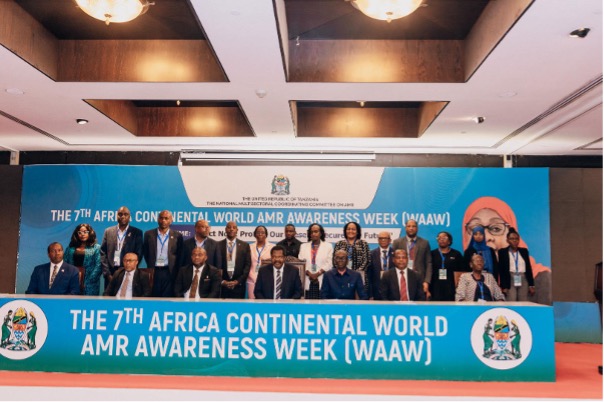
The continental observance, guided by the theme “Act Now: Protect Our Present, Secure Our Future,” was graced by Tanzania deputy head of state, One Health ministers, Africa CDC, AU-IBAR, Quadripartite organisations (WHO, FAO, WOAH, UNEP), research institutions, youth networks, and regional AMR champions to strengthen the continent’s response to antimicrobial resistance.
In his presentation, Dr Sirdar reflected on the evolving AMR landscape across Africa and the steady progress countries had made in establishing surveillance systems, expanding laboratory capacity, and operationalising their AMR National Action Plans. He spoke about the increasing relevance of genomic and environmental surveillance, particularly as countries sought faster, more accurate ways to detect emerging threats. He emphasised that harmonised data standards, shared protocols and interoperable systems remained critical for enabling Africa to compare trends, respond swiftly, and coordinate across borders.
Dr Sirdar also introduced key findings from ProMED-AMR, ISID’s digital early-warning and event-based surveillance system. He explained how ProMED-AMR had captured AMR-related signals from across the continent during 2023 and 2024, highlighting recurring themes such as ESBL-producing organisms, carbapenem resistance, and high levels of macrolide resistance. He described how this non-traditional surveillance insights complemented formal laboratory-based programmes by offering early indications of emerging problems, especially in settings where routine diagnostics remained limited. His narrative underscored the value of triangulating both formal and informal data streams to improve situational awareness and inform national AMR responses.
Throughout the presentation, Dr Sirdar explored the continent’s expanding research landscape. He described ongoing work on novel antimicrobials and anti-virulence strategies, behavioural research to strengthen antimicrobial stewardship, and molecular epidemiology studies that were helping African countries better understand resistance patterns. He referenced research on infection prevention and control, environmental contamination, food systems, wastewater, and animal health, while illustrating how AMR challenges spanned the entire One Health spectrum. He also highlighted new evidence emerging from TB and HIV drug resistance studies, pointing to the need for continuous monitoring and improved treatment strategies.
Throughout the presentation, Dr Sirdar explored the continent’s expanding research landscape. He described ongoing work on novel antimicrobials and anti-virulence strategies, behavioural research to strengthen antimicrobial stewardship, and molecular epidemiology studies that were helping African countries better understand resistance patterns. He referenced research on infection prevention and control, environmental contamination, food systems, wastewater, and animal health, while illustrating how AMR challenges spanned the entire One Health spectrum. He also highlighted new evidence emerging from TB and HIV drug resistance studies, pointing to the need for continuous monitoring and improved treatment strategies.
A key message running through his presentation was the importance of African-led innovation. Dr Sirdar noted that meaningful AMR progress required strong local research ecosystems, regional manufacturing capacity, and accessible context-appropriate diagnostics. He emphasised the importance of investing in the next generation of African scientists-students, young professionals, and early-career researchers, whose contributions would shape the continent’s AMR preparedness over the next decade.
In closing, Dr Sirdar reinforced that evidence must lead directly to action. He encouraged countries to translate surveillance findings, research outputs, and operational insights into policies, stewardship programmes, and integrated One Health interventions that could reduce the burden of AMR and strengthen health systems. He expressed appreciation for the collaborative spirit that defined WAAW 2025 and reaffirmed ISID’s commitment to supporting African partners in advancing sustainable, evidence-driven AMR strategies.
Dr Sirdar’s virtual participation added an important scientific and continental perspective to the discussions in Dar es Salaam, contributing to a week-long programme dedicated to strengthening Africa’s AMR response through partnership, innovation, and shared learning.