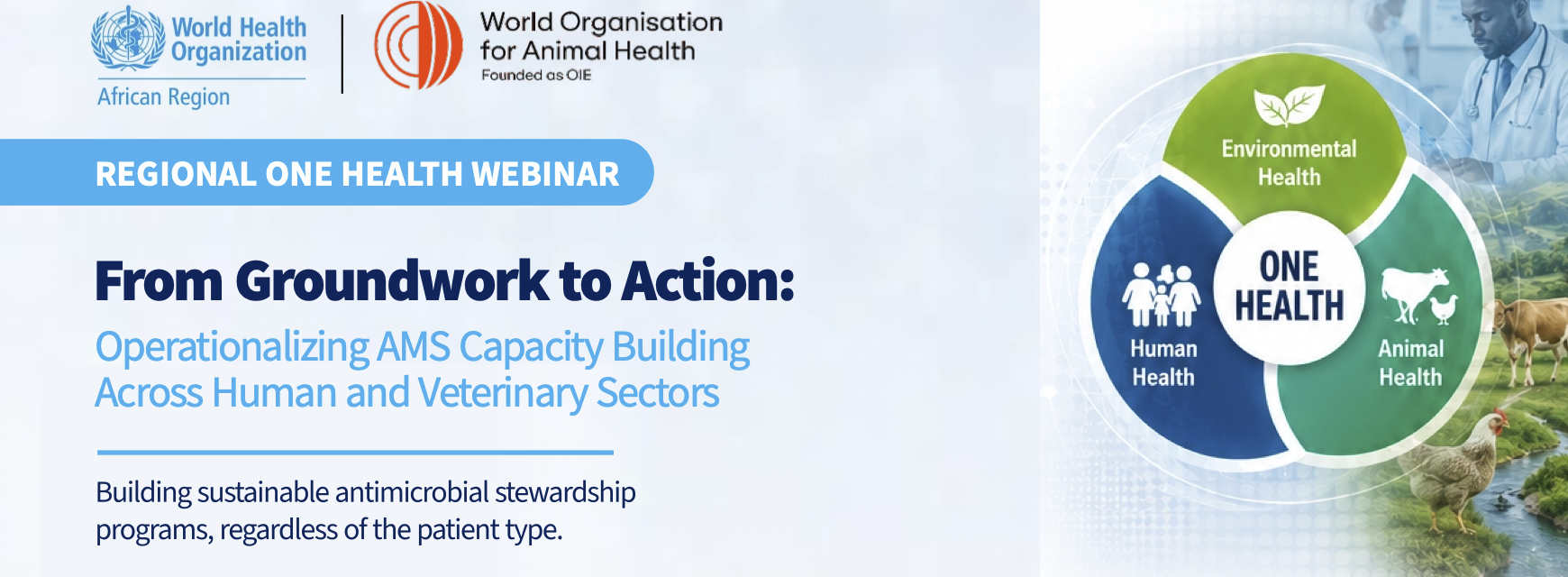
The World Health Organization Regional Office for Africa (WHO AFRO) and the World Organization for Animal Health (WOAH) co-hosted the Africa Regional One Health Antimicrobial Stewardship (AMS) Webinar, facilitated by Dr Mohamed Sirdar of the International Society for Infectious Diseases (ISID) under the theme: "From Groundwork to Action: Operationalizing AMS Capacity Building Across Human and Veterinary Sectors." The webinar brought together policymakers, healthcare professionals, veterinarians, researchers, academics, students, and representatives from National AMR Coordinating Committees across Africa and beyond to explore practical approaches for strengthening antimicrobial stewardship through a coordinated One Health approach. The event highlighted that while many countries have developed National Action Plans for antimicrobial resistance (AMR), the priority now is translating these strategies into sustainable implementation. Moderated by Dr Mohamed Sirdar, Global Program Specialist (AMR) at ISID, the webinar emphasized the importance of integrating stewardship across human, animal, and environmental health sectors to address one of the world's most pressing public health challenges.
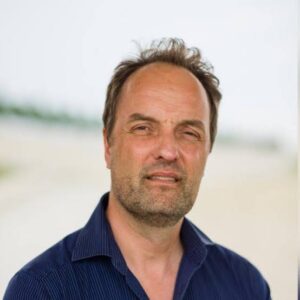
Opening remarks from WHO AFRO and WOAH reinforced the urgency of strengthening One Health collaboration in response to the growing burden of antimicrobial resistance across Africa. The first technical presentation was delivered by Dr Jeroen Schouten, Associate Professor and Director of Drive-AMS at Radboud University Medical Center, Netherlands. Drawing on international implementation experience, Dr Schouten demonstrated that successful antimicrobial stewardship depends not only on technical guidelines but also on behaviour change, multidisciplinary teamwork, continuous measurement, and quality improvement. He introduced practical frameworks for operationalizing stewardship programmes, highlighting the importance of integrating antimicrobial stewardship, infection prevention and control, and diagnostic stewardship into routine clinical practice. Using examples from the Drive-AMS capacity-building programme across East Africa, he illustrated how structured implementation science and behaviour change antecedents can transform stewardship principles into measurable improvements in patient care.
The veterinary perspective was presented by Dr Olatunji Nasir, President-Elect of the World Veterinary Association, who emphasized that effective antimicrobial stewardship begins with preventing disease rather than treating it. His presentation highlighted how affordable biosecurity interventions, including improved farm hygiene, vaccination, disease surveillance, responsible prescribing practices, and strengthened community engagement, can substantially reduce antimicrobial use in livestock systems, particularly within resource-limited settings. Dr Nasir further stressed that stewardship strategies must reflect the realities of smallholder production systems, where limited diagnostic capacity, informal medicine markets, workforce shortages, and financial constraints require practical, context-specific solutions rather than models designed for high-resource settings.
During the interactive discussion, participants explored common challenges affecting stewardship implementation across both sectors, including laboratory capacity, leadership, workforce development, policy harmonization, behaviour change, and sustainable financing.
A central message emerged throughout the webinar: infection prevention in healthcare facilities and biosecurity in livestock production are complementary pillars of antimicrobial stewardship. Preventing infections reduces the need for antimicrobials, helping preserve the effectiveness of these life-saving medicines for both humans and animals.
The discussion also reinforced the importance of multidisciplinary collaboration, continuous capacity building, and stronger partnerships between ministries of health, ministries responsible for animal health, academic institutions, and international organizations. The webinar concluded with a shared commitment from WHO AFRO, WOAH, and ISID to continue supporting Member States in strengthening integrated One Health antimicrobial stewardship programmes across Africa. By focusing on practical implementation, local capacity development, and collaboration across sectors, the webinar demonstrated how countries can move beyond policy development toward sustainable stewardship systems that protect both human and animal health.
As antimicrobial resistance continues to threaten global health, food security, and economic development, initiatives such as this regional webinar play an essential role in translating One Health principles into action and building resilient health systems for the future.